What Jobs Will Exist in the Next 5 Years as AI Advances?
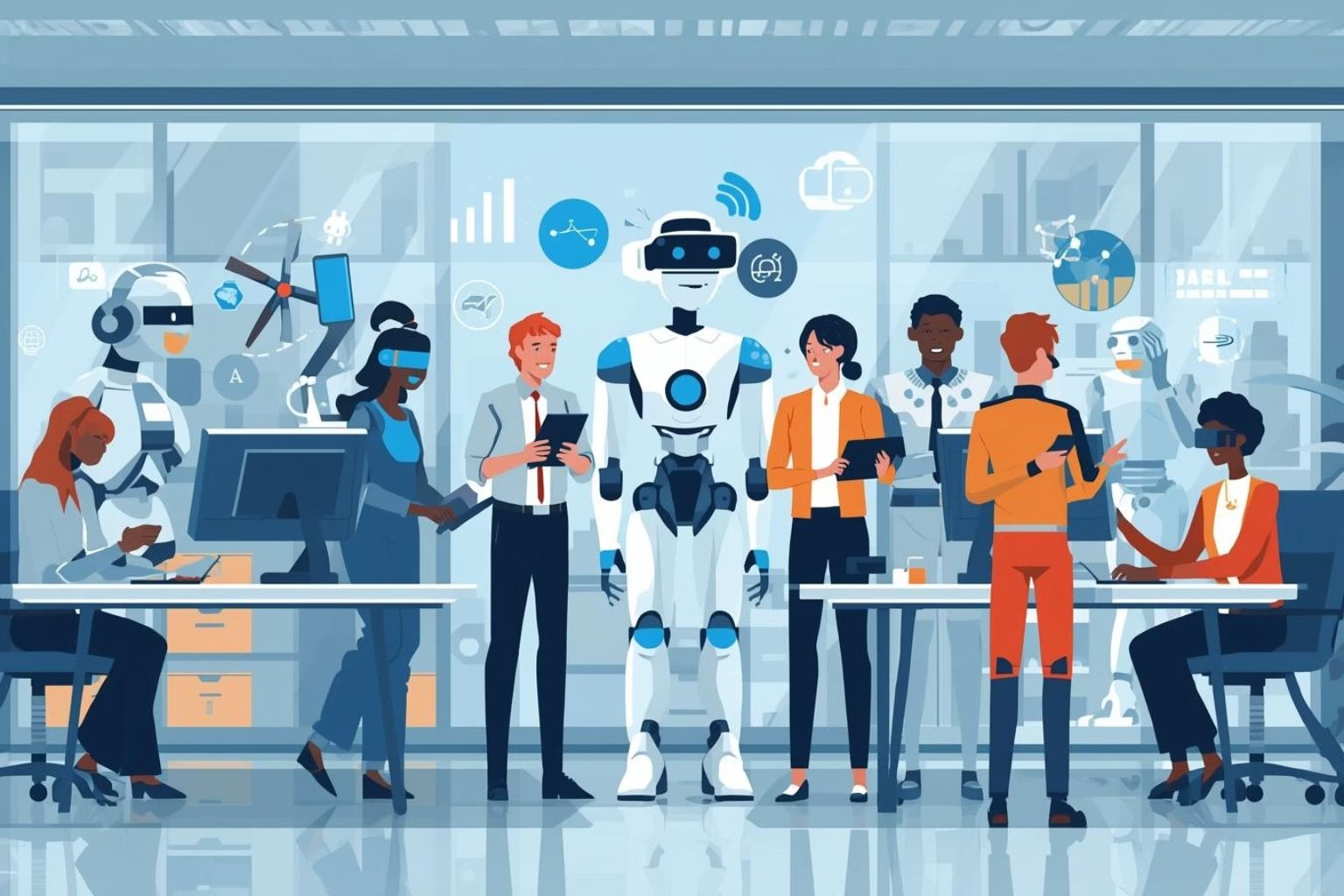
With AI improving rapidly, many professionals are questioning the future of work. Software developers, in particular, are increasingly worried that AI will replace a large percentage of development jobs. While some believe software development will not disappear entirely, there is growing concern that AI could reduce the need for developers by as much as 90%.
These fears are not limited to software development. Similar concerns are being raised across white-collar roles, including finance, marketing, and sales. In many areas, AI has already reduced the number of people required to do the same work, leading to job consolidation and increased competition.
These concerns are already visible at major global tech companies like Microsoft as AI adoption accelerates.
Recent hiring trends in India show companies becoming more selective with new roles as AI adoption increases, with many firms cutting volume hiring and focusing only on high-impact skills.
How AI Is Reducing the Need for People
Several perspectives agree that AI does not need to replace all jobs to cause disruption. Instead, businesses may simply need far fewer people. Tasks that once required large teams can now be handled by one or two individuals overseeing AI systems.
This reduction is already visible in software development. AI can generate code quickly, assist with debugging, and accelerate prototyping. As a result, junior-level execution roles are increasingly vulnerable, while productivity expectations continue to rise.
Some believe this trend will lead to more middle-class workers competing for fewer jobs, including lower-wage roles.
As tech layoffs continue, analysts note that while AI contributes to workforce reduction, it is not the only factor behind job cuts in India’s technology sector, as the role of AI in India’s tech layoffs remains debated.
Will Software Development Jobs Survive?
Opinions on software development are divided.
One view argues that AI will replace most developers, leaving only a small percentage in decision-making or oversight roles. According to this view, if a job’s output follows patterns, AI will eventually learn it and replace the human role.
Similar questions are being raised in consulting, where AI is increasingly handling research and analysis tasks.
Another viewpoint points to increased demand for software. As AI makes software development faster and cheaper, businesses may build more applications, not fewer. These systems still need humans to:
- Translate business needs into requirements
- Validate and test AI-generated code
- Meet clients and clarify misunderstandings
- Maintain and update complex systems
Unless artificial general intelligence becomes reality, many believe human involvement will remain necessary for these tasks.
At the same time, Indian IT leaders report growing global demand for AI-driven services, even as teams become leaner and roles continue to evolve.
Decision-Making Roles and Responsibility
A recurring argument is that the safest roles are those involving real responsibility. AI may execute tasks, but humans still define goals, priorities, and trade-offs.
However, others point out that decision-making roles represent only a small fraction of the workforce. Even if these roles grow slightly, they cannot absorb the number of people displaced from execution-focused jobs.
This leads to the concern that by 2030, people may be competing for a much smaller percentage of available roles.
Physical Work and Infrastructure Limitations
While AI and robotics are advancing, some argue that physical jobs may last longer than expected. Many real-world workplaces are not designed for automation. Old infrastructure, uneven environments, and custom machinery make full robotic replacement difficult and expensive.
Maintenance, factory engineering, and skilled manual work often require hands-on problem-solving in environments where AI currently struggles.
That said, others believe robotics will eventually replace many physical roles once hardware and software mature.
Will New Jobs Replace the Old Ones?
Some believe AI will create new technologies and entirely new categories of work. Others remain skeptical, arguing that there is no guarantee these new roles will offset the number of jobs lost.
If AI increases productivity enough to justify new tools and systems, those tools must still deliver cost savings or efficiency gains. Otherwise, businesses would have little incentive to adopt them at scale.
The concern remains that downstream job losses may outweigh new opportunities.
How People Are Adapting
Several participants emphasize that individuals cannot avoid AI and must learn to work with it. Using AI as a force multiplier, rather than competing against it, is seen as essential.
This shift is also reflected in India’s large-scale AI upskilling efforts, with government-led programs seeing strong participation across multiple states.
Key survival strategies mentioned include:
- Learning to validate and verify AI output
- Developing strong domain knowledge
- Understanding business needs deeply
- Owning outcomes rather than executing instructions
Many expect productivity expectations to increase while job security decreases.
Frequently Asked Questions
Conclusion
The future described is not one where all jobs disappear, but one where far fewer people are needed to do the same work. AI is accelerating this shift across white-collar and, eventually, blue-collar roles.
Policymakers have emphasized that reskilling and real-world AI adoption will determine whether AI becomes a job destroyer or an economic accelerator in the coming years.
The next five years are likely to bring intense competition, consolidation of roles, and a growing divide between those who can work alongside AI and those whose tasks can be fully automated.